
Factory New Ammo Explained: What It Means, Why It Matters, and How to Verify It
Factory new ammo is manufactured to exacting tolerances, ensuring every round delivers consistent pressure and velocity shot after shot. This precision means you can trust your firearm to perform reliably, reducing the frustration of malfunctions when you need it most. Simply load it into your firearm’s chamber as you would any cartridge, and let the factory’s quality control work for you—no handloading guesswork, no variable performance. Each round’s uniform powder charge and primer seating give you the confidence to focus on your aim, not your ammunition.
What Exactly Does “Factory New” Mean When You Buy Ammunition?
When you buy factory new ammunition, it means the cartridges were assembled from newly manufactured components—primer, case, propellant, and projectile—at a licensed commercial plant, never loaded previously. Unlike remanufactured or reloaded rounds, factory new ammo has not been fired, resized, or subject to aftermarket hand-assembly. Each batch is produced under standardized mechanical tolerances and quality control, so you get consistent headspace, uniform case lengths, and fresh primers that seat evenly. The practical takeaway: exactly what “factory new” means is that you 7mm Rem Mag Ammo for Sale are buying a first-use product with no unknown history, no prior pressure signs, and no risk of worn brass from another shooter’s chamber. This translates to predictable velocities and reliable ignition, as long as you store it properly and match it to your firearm’s specifications.
Defining Factory Fresh: The Difference Between New Production and Remanufactured Rounds
When you buy “factory new” ammo, it means virgin brass, fresh primers, and new propellant assembled on a production line—nothing has been fired before. Remanufactured rounds, however, use once-fired brass that’s been inspected, resized, and reloaded to factory specs. The key difference is the case’s history: new production guarantees untested metal, while remanufactured cases have already expanded in your chamber. That matters because new brass offers consistent neck tension and pressure, while remanufactured rounds can vary slightly in case length or primer pocket tightness. For precision or defensive use, new production ammunition offers the most reliable performance; for range plinking, remanufactured saves money without sacrificing safety.
Q: Is remanufactured ammo less accurate than factory new?
A: Often, yes—new brass holds uniform dimensions, but remanufactured cases may have subtle work-hardening, leading to slightly larger groups at long distance.
How to Verify You Are Getting Truly Unfired Cartridges from the Box
To verify unfired cartridges, inspect the primer strike zone under direct light; a factory-new case shows an absolutely smooth, unblemished primer cup with no firing-pin impression. Check the case mouth for a distinct, undamaged crimp or taper—reloaded or resized cases often reveal tooling marks or a visibly polished mouth. Examine the headstamp for sharp, raised lettering; any flattening or dimpling indicates a prior chambering. Feel the cartridge’s overall resistance—new rounds have a firm, consistent bullet seating with no wobble. Finally, confirm the box’s seal and lot code are intact, though the definitive test remains the pristine primer. *Any slight indentation, even hairline, means the round has been cycled or struck.*
Why Choose Freshly Manufactured Cartridges Over Reloads or Surplus?
When you’re deciding between ammo options, freshly manufactured cartridges are the reliable choice for consistent performance. Reloads can have uneven powder charges or primer seating, which leads to velocity swings and occasional failures to cycle—not ideal when you’re dialing in a zero or trusting your life on a round. Surplus, meanwhile, often burns dirty, corrodes chambers, and may have hard primers that cause light strikes in modern guns. Factory new ammo eliminates these variables: every round has uniform case dimensions, fresh propellant, and sealed primers. That means tighter groups at the range and zero malfunctions during practice. You’re also getting correct pressure curves, which protects your firearm’s bolt and barrel from premature wear. For anyone who values predictability, freshly made cartridges simply remove the guesswork.

The Reliability and Consistency Benefits of Using Brand-New Brass and Propellant
Brand-new brass delivers consistent case dimensions and neck tension from the very first round, eliminating the split necks and stretched primer pockets that plague reused cases. Fresh propellant burns at a uniform, certified pressure curve, so velocity deviations stay razor-thin—typically under 15 fps—which translates to stacking identical groups at distance. Surplus powder, by contrast, often suffers from lot-to-lot degradation, causing unpredictable pressure spikes or weak ignition. New primers seat flush in virgin pockets every time, ensuring reliable ignition in cold or dirty conditions without the hard strikes reloads sometimes demand. Even subtle variations in case wall thickness, which virgin brass avoids entirely, can shift point of impact several inches at 300 yards. The payoff is simple: your rifle performs the same on shot fifty as it did on shot one.

Brand-new brass and propellant guarantee repeatable chamber fit, uniform burn, and flawless ignition—directly transforming factory ammo into a benchmark of shot-to-shot reliability.
How New Ammo Reduces Misfires, Hangfires, and Extraction Problems
Freshly manufactured cartridges eliminate the primer-seating inconsistencies that cause misfires and hangfires, as automated presses ensure uniform primer depth and anvil contact. Factory-new ammo also uses virgin brass with proper case hardness, preventing the weak neck tension or swollen chambers that lead to extraction failures. Because each round is assembled with fresh propellant and sealed primers, ignition is instantaneous and complete, avoiding the delayed burn that characterizes degraded surplus powder. Additionally, precisely resized cases and correct headspacing from the factory guarantee smooth ejection from the chamber, even in tight tolerances. Reliable ignition and ejection are thus engineered into every new round, unlike reloads or aged surplus.
What’s Inside a Box of Brand-New Cartridges? Understanding Components and Quality Control
Opening a box of factory new ammo reveals more than shiny brass; it’s a compact system of four precision-made components. The primer, seated flush in the case head, is the ignition spark, while the propellant Ammunition for Sale powder—measured to the grain—determines velocity and pressure. The bullet itself, whether FMJ or hollow point, is crimped to a consistent depth to ensure uniform chambering. Quality control is invisible but relentless: each case is gauged for length and wall thickness, and every round is weighed or scanned to catch double charges or missing primers. A factory seal on the box isn’t just for freshness—it’s proof that the lot passed ballistic testing for pressure consistency. You’re not buying cartridges; you’re buying controlled explosions with a warranty. The real difference lies in tolerances—cheap ammo skips final magnetic inspection, risking embedded debris. Trust the lot number, not the brand name. Even the most meticulous factory line can’t guarantee a perfect round, but it guarantees the odds are overwhelmingly in your favor.
Virgin Brass Casings vs. Resized Cases: Why It Matters for Your Firearm
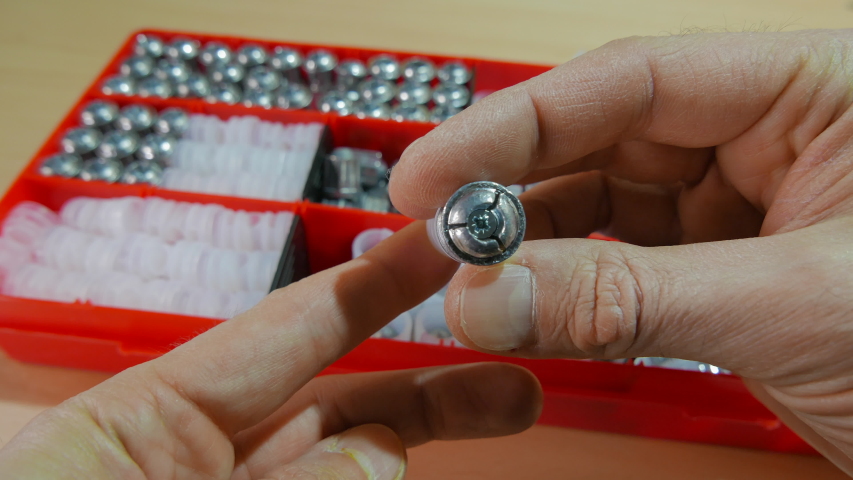
Virgin brass casings, formed directly from virgin metal, offer uniform wall thickness and consistent internal volume, which translates to more predictable pressure curves and tighter accuracy potential. Resized cases, salvaged from fired rounds, have already been stretched and worked, so they require resizing to spec; this introduces microscopic stress and variance that can affect bullet pull and chamber fit. For a factory-new cartridge, virgin brass means you start 9mm Ammo for Sale with a pristine, annealed case that hasn’t experienced the thermal and mechanical fatigue of a prior firing. This makes virgin brass especially critical for high-pressure loads, where even slight case inconsistencies can spike pressure dangerously. Resized cases, while dependable for plinking, often display looser primer pockets and shortened case life. Virgin brass casings ensure maximum structural integrity and reloadability after your first shot, giving you a foundation that’s both safer and more consistent than any recycled alternative.
Virgin brass casings deliver unmatched consistency, safety, and reloadability, while resized cases trade precision for lower cost—mattering most for accuracy and high-pressure applications.
The Role of Consistent Primer Seating and Propellant Weight in Fresh Loads
In factory-new ammunition, consistent primer seating and propellant weight form the backbone of predictable ballistic performance. A primer seated too deep can crush the priming compound, altering ignition timing, while a proud primer changes headspace, affecting pressure curves. Likewise, each charge of propellant is metered to a fraction of a grain; even minor deviations shift muzzle velocity, point of impact, and chamber pressure. Fresh loads from reputable manufacturers undergo automated checks that reject rounds outside tight tolerances, ensuring every cartridge in the box behaves identically. This uniformity matters most for precision shooting or defensive use, where a single odd round can cause a flyer or a pressure spike. Without this dual consistency, new ammunition would degrade into a gamble.
Q: Why do primer seating and propellant weight matter more in fresh loads than in handloads?
A: Factory new ammunition is engineered as a complete system. Handloaders can adjust for a specific rifle’s quirks, but fresh loads must work across all firearms. Consistent primer seating guarantees uniform flame propagation into the case, and precise propellant weight ensures the same gas volume is produced each shot. Together, they lock in the internal ballistics before the bullet even moves, delivering the repeatable accuracy and safe pressure that users expect from a box of new cartridges.
What to Check for in the Box: Visual and Physical Signs of Proper Manufacturing
When you open a box of factory-new ammunition, begin by inspecting the **visual and physical signs of proper manufacturing** in the cartridges themselves. Check that each case mouth is perfectly smooth and uniformly crimped, with no rolled edges, dents, or nicks—these imperfections can cause feeding failures. The primer should sit flush or slightly recessed below the case head, never proud, and show a consistent, even sealant ring. Examine the bullet seating: it should be straight, without tilt, and the cannelure (if present) must align evenly around the circumference. Run your thumb across the case body to feel for any raised burrs, scratches, or oily residue—factory ammo should be clean and dry inside the box. Tilt the box and listen for a solid, non-rattling sound, indicating tight primer pockets and well-seated bullets.
Q: What rust or discoloration on new cartridges means?
Any rust, green verdigris on brass, or dark spots on the primer indicate poor storage or manufacturing contamination—reject that box, as these are clear physical signs of compromised integrity.
How to Choose the Right Freshly Made Load for Your Firearm’s Specific Needs
When selecting factory new ammunition for your firearm, first match the cartridge headstamp exactly to the barrel’s chamber marking—no exceptions. Then, determine your intended use: for defensive carry, choose a freshly made load with a proven expanding bullet and published velocity from a 4-inch barrel; for precision target work, prioritize match-grade factory loads with low extreme spread in lot-tested powder charges. Check your firearm’s twist rate and rifling—a 1:7 twist handles heavy 77-grain projectiles, while 1:12 prefers 55-grain. Always inspect the factory seal and primer for uniformity, and fire a five-round group from a rest to confirm the load’s point of impact matches your zero. **Never assume a premium price equals optimal performance—only your barrel’s group size and cycling reliability decide that.** Q: How do I choose between two factory loads with identical bullet weight? A: Compare their advertised ballistic coefficients 9×18 Makarov Ammo for Sale and barrel length data, then test the one with a shorter recommended twist range—it typically stabilizes more consistently in your rifle.
Matching Bullet Weight, Velocity, and Pressure Limits to Your Handgun or Rifle
Matching bullet weight, velocity, and pressure limits begins with your firearm’s published specifications, as factory new ammo must stay within the SAAMI or CIP pressure ceiling for your specific chamber. Heavier bullets often require slower powders to keep peak pressure safe, while lighter bullets can reach higher velocities without exceeding the limit—but only if your barrel twist rate stabilizes them. Pressure limits dictate the maximum velocity you can safely achieve, so selecting a load that balances these three variables prevents case-head fatigue and premature throat erosion. Your gun’s barrel length and gas system (if semi-automatic) further shift the practical velocity curve, meaning a load safe in a test barrel may still be marginal in your platform. Thus, verify each factory load’s stated velocity against your expected real-world reduction before committing.
Selecting Between Full Metal Jacket, Hollow Point, and Ballistic Tip in New Production
When selecting new production ammunition, the projectile profile dictates terminal performance. Full metal jacket rounds excel for economical range practice and reliable feeding, offering minimal deformation but limited stopping power. Hollow points are engineered for self-defense, expanding upon impact to 6mm Remington Ammo for Sale transfer energy rapidly while reducing over-penetration risk. Ballistic tips combine a streamlined polymer insert with a jacketed core, promoting flat trajectories and controlled expansion at extended distances. For factory-new defensive loads, prioritize hollow points; for precision target work, choose ballistic tips. In sequence: verify your firearm’s twist rate, decide the primary purpose, then match the bullet style to that role. Avoid FMJ for personal protection, as its lack of expansion reduces effectiveness against threats.
Using Factory Fresh Rounds for Break-In, Accuracy Testing, and Carry Rotation
Using factory fresh rounds for break-in, accuracy testing, and carry rotation ensures consistent performance from the first shot. For a new firearm’s break-in, fire 50–100 fresh rounds to smooth mating surfaces without introducing variance from handloads. For accuracy testing, shoot five-shot groups from a rested position with fresh rounds from the same lot, as this isolates the gun’s mechanical precision. For carry rotation, cycle out your live ammunition every 3–6 months, replacing it with factory fresh rounds to prevent setback, primer degradation, or moisture-induced failures. A clear sequence:
- Fire fresh rounds for break-in and record any malfunctions.
- Bench-test fresh rounds for group size and point-of-impact shifts.
- Load fresh rounds for daily carry and rotate them on a set schedule.
Fresh factory ammunition eliminates reloading variables, 9.3x72R Ammo for Sale making each evaluation and carry cycle predictable.
Common Questions About Purchasing and Storing Brand-New Cartridges
When buying factory new ammo, the most common question is whether pristine packaging guarantees fresh primers—it does not, as shelf life depends on storage, not the box seal. Always verify the headstamp year or lot code before purchase, and ask the retailer how long the brand-new cartridges have sat in climate-controlled inventory. For storage, the key rule is keep ammo below 75°F with under 50% humidity; a sealed ammo can with desiccant beats a factory cardboard box for long-term preservation. Never store cartridges in a hot garage or cold basement, as temperature swings degrade powder burn rate. Rotate stock by purchasing only what you’ll shoot within 18 months, and resist buying bulk “deals” unless you can guarantee stable conditions. Inspect each round for tarnished brass or loose bullets before loading, even if the box is untouched.
Does Buying New-Production Ammo Cost More Than Reloads—and Is It Worth It?
Yes, buying new-production ammo generally costs more than reloading your own, but the gap is narrower than it used to be. When you factor in the price of primers, powder, bullets, and your time spent at the bench, handloading saves maybe 20–40% per round—but only if you shoot a lot. For casual shooters, that saving isn’t worth the upfront gear cost (a press, dies, scale) or the hours of labor. New ammo also offers factory quality control, warranty-backed consistency, and zero risk of a squib from a bad crimp. So, is 9.3x62mm Mauser Ammo for Sale it worth it? If you value convenience and reliability over pinching pennies, premium new-production ammo wins. If you shoot thousands of rounds monthly, reloading pays off—just not for everyone.
How Long Will Unopened Factory Fresh Ammo Remain Reliable in Storage?
Unopened factory fresh ammo remains reliable for decades—typically 20 to 30 years or more—provided it’s stored in a cool, dry, stable environment. The factory seal and pristine primers resist moisture and oxidation far better than reloads or exposed rounds. Rotating stock every few years is wise, but unopened factory .50 Cal Ammo for Sale fresh ammo storage longevity rarely becomes a practical concern before the original purchaser passes it down. Avoid temperature swings and high humidity; these are the primary enemies of propellant stability. Ammo kept in original packaging inside a sealed ammo can with desiccant will outperform expectations. You are not gambling with reliability—you are banking on proven chemical and mechanical design.
Q: How long will unopened factory fresh ammo remain reliable in storage?
A: With proper storage—consistent 55–75°F and low humidity—expect flawless function for 25 to 30 years, and many shooters report reliable ignition past 40 years.
Can You Trust Bulk-Packed New Ammo as Much as Premium Boxed Cartridges?
Yes, you can generally trust bulk-packed new ammo as much as premium boxed cartridges, provided it comes from a reputable manufacturer. The core difference is not quality control but packaging, as both often leave the same factory line. Bulk ammo prioritizes cost-efficiency by skipping fancy trays and individual slots, which reduces handling and price without altering the cartridge’s ballistics or reliability. However, inspect loose rounds for dents or primer 7mm Rem Ultra Mag Ammo for Sale damage, as unprotected brass can suffer minor transit bumps. For high-volume range practice, bulk is a legitimate, budget-friendly choice. For precision competition or defensive carry, premium boxed rounds justify their cost with stricter visual inspection and consistent lot testing. Bulk-packed new ammo offers equal functional trust when sourced from major brands, but premium boxes add peace of mind for critical applications.
- Both bulk and boxed rounds typically share identical component specs and manufacturing tolerances.
- Loose ammo risks cosmetic dings from tumbling, specialty sports and supply which rarely affect function but should be checked.
- Premium cartridges undergo extra per-round visual inspection and are often selected from tighter tolerance batches.
- For plinking and training, bulk saves money; for hunting or self-defense, premium’s consistent accuracy is worth the premium.